SolarWebsite Rebuild
How a solar installer found a new line of business in its own search data
Content we published for a solar installer kept drawing interest in service and diagnostics, work the company did but had never really promoted. Today that work is a dedicated service line with its own page and request form, and it’s one part of a partnership that has produced more than $2.2M in signed projects from website leads.
INDUSTRY Residential and commercial solar
•
TIMEFRAME Ongoing since February 2025
•
SCOPE Website rebuild, SEO migration, content, local search, and lead data
The results
$2.2M+
signed project value from website leads
54%
of signed customers, from 26%
3.5x
signed website customers
126
page-one keywords, from 1
15%
of web deals signed, from 8%
The Challenge
The company had a strong reputation in the field and years of experience behind it, with high-end residential solar as its core business. Its website didn’t show any of that. The site worked like a single landing page: outdated, hard to use, full of technical issues, and with almost no structure for search engines or customers to follow.
The numbers made the problem plain. Out of 636 keywords we tracked, the site ranked on Google’s first page for one. About 70% of its search traffic came from people already typing the company’s name, which meant almost nobody was finding it for the first time through search. And the forms were buried in spam, roughly 470 junk submissions a month in early 2025, so the real leads that did come in were hard to spot.
There was also something worth protecting. The old domain carried years of history and links, and a careless rebuild could have thrown that away.
Why this was such a good fit
This team knows solar inside and out, and it had lead data going back years. What it didn’t have was time to turn that knowledge and data into marketing materials. We could take the marketing off their plate and give them something more useful in return: a clear read on where their demand was coming from, so they could make business decisions with it.
Our Approach
We started with their data. Before restructuring anything, we went through the company’s lead history to see which services, customers, and areas actually produced signed jobs. Every decision that followed was rooted in what we found there.
Rebuilding Without Losing Ground
We rebuilt the website from the ground up and handled the move carefully, mapping old pages to new ones so the site kept the history and link equity it had built over the years. The new site launched on June 23, 2025. Google latched onto this update almost instantly, indexing the new pages right away. A week later, 111 tracked keywords were on Google’s first page, up from one.
The new form settings we improved in their CRM cut spam submissions by more than 99%, from hundreds a month to a handful, so every lead that reached the team was a real person asking about solar.
Building Real Structure
The old site had no structure to speak of, so we built it. Service pages for each type of system and service. Location pages for the areas they serve. Pages written for the different kinds of homeowners and businesses that buy solar, based on who had actually signed with them before. Brand pages that show their hands-on experience with the equipment they install, and a team section that puts real people behind the work.
All of it is linked into content clusters that support each other, so a reader moving from a blog post to a service page to a location page follows the same path a buyer would. We built citations and kept the Google Business Profile active alongside it, all part of a single organic search program.
Turning Search Data Into a Service Line
We watch the queries a site is getting impressions for, and we look for new themes as they appear. Here, one stood out. As we published content on related topics, interest in solar service, diagnostics, and maintenance kept showing up, even though the company hadn’t heavily promoted that work.
We brought it into our planning conversations, explored it in more content, and watched demand build. The company decided to make it a real offering. It now has a dedicated service page with its own request form, and after that form launched in early 2026, service requests grew from none to about 10 a month. The service page ranks near the top for searches like “solar panel maintenance near me.”
That’s the part of this work we’re proudest of. We took a lot of the marketing off their plate, and we put their demand in context so they could make business decisions based on our insights.
Getting Ahead of the Tax Credit Cutoff
In 2025, federal law ended the residential solar tax credit years ahead of schedule. The deadlines were tight, and the rules differed for residential and commercial projects, including whether a system had to be in service or just under contract by a given date. Conflicting information spread fast across various sources online.
We made sure everything on the site was accurate and transparent, so buyers knew exactly what their options were. That helped the company capture homeowners and businesses who wanted to go solar while the credit was still available, and it meant the information people found from this company was information they could trust.
Opening New Markets
The company held credentials it had never put on its website. Featuring that expertise gave it the standing to compete in areas it had barely touched before. We built out off-grid content, an area the company had never really pursued, and expanded its commercial presence beyond the high-end residential work that had always been its core.
Showcasing Real Projects
Most recently, we started turning past jobs into project pages: real installations the company is proud of, each one connected to the service types, cities, and customer reviews that go with it. Each one gives a prospect proof that this company has done the exact kind of job they’re considering.
From a search perspective, this helps create associations for the brand, which are crucial. This helps these search and AI models associate the brand with locations, service offerings, products, and more, which strengthens performance.
The Results
Since the new site launched, website leads have produced more than $2.2M in signed project value, and that figure leaves out signed deals that don’t have a value recorded.
Comparing the 12 months before launch with the 12 months after, website deals nearly doubled, from 208 to 393. The share of those deals that signed rose from 8% to 15%, and signed customers from the website grew from 17 to 59.
Figure 1
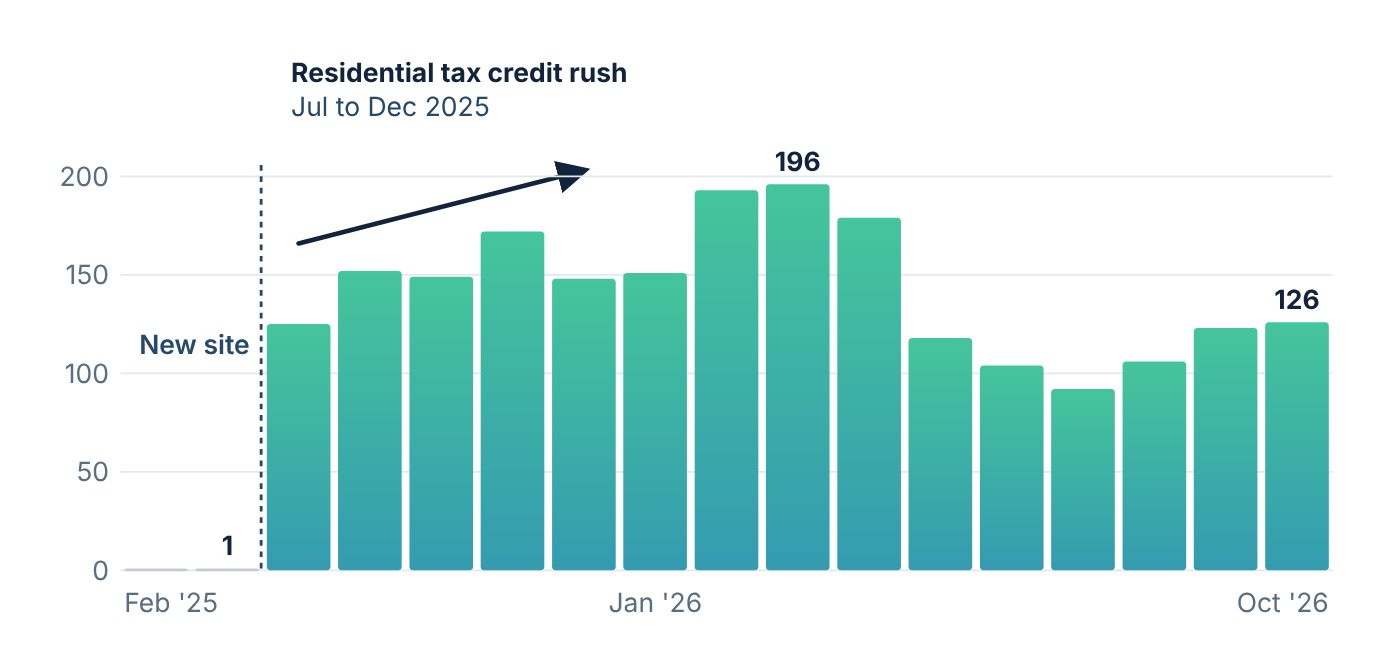
The bigger shift is where the company’s business comes from. Before the rebuild, 26% of signed customers came from the website. After, 54% did. With more than half of new customers coming from its own site, the company buys fewer leads to fill its schedule or grow it, wins jobs at a lower average cost, and gets a steadier flow of leads it controls.
Figure 2
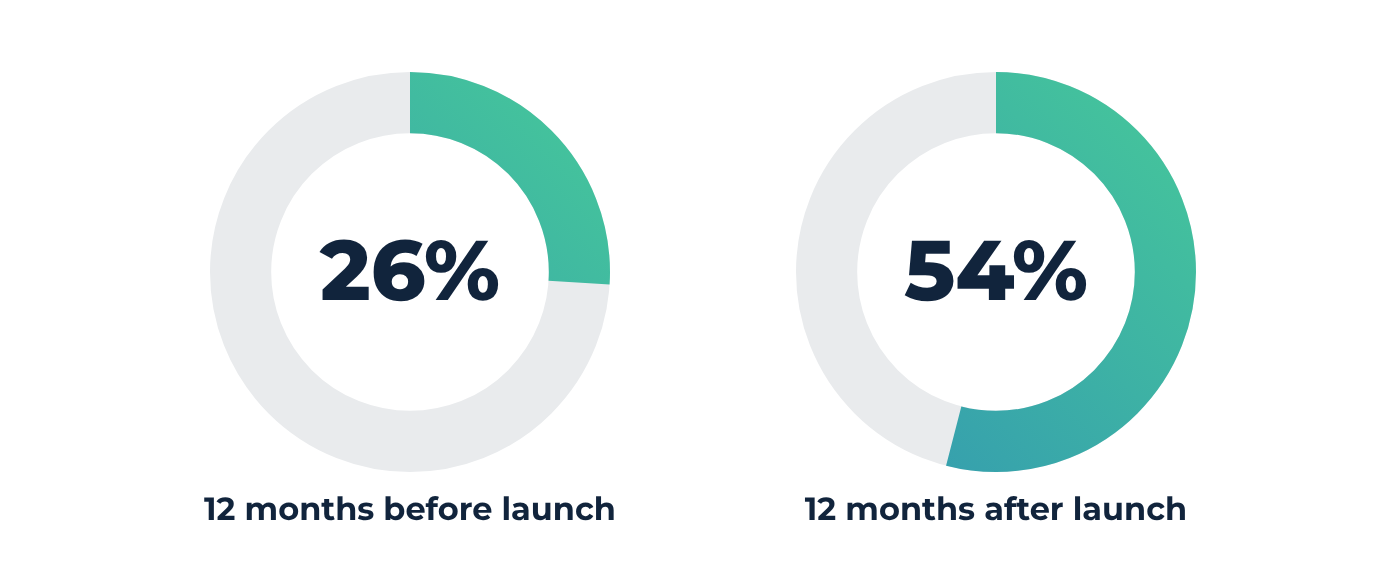
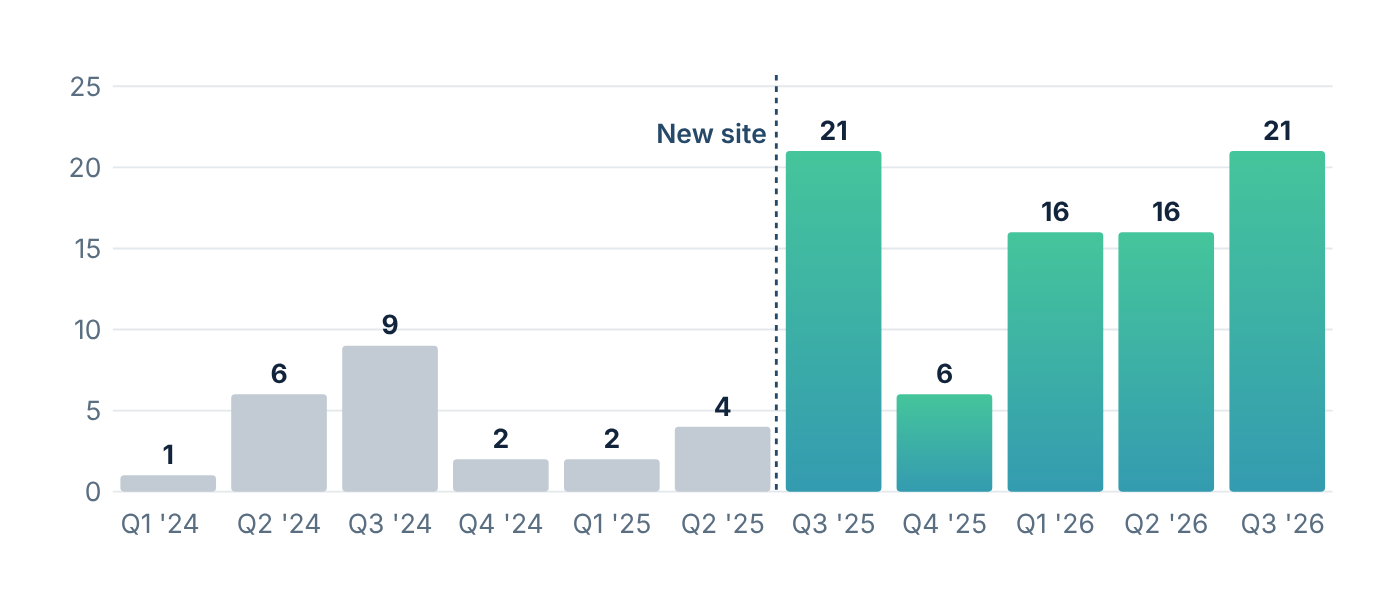
That steadiness showed up when the residential credit ended. A stronger residential offer and new lead types, including service, system expansion, and commercial work, meant sales didn’t depend on the incentive. The third quarter of 2026 matched the pre-deadline rush of the third quarter of 2025, with 21 signed website customers in each.
Figure 3
Search kept growing underneath it. Google clicks rose 32% from late August 2025 to late August 2026, the number of pages ranking in search grew from 5 to 50, and the site earned citations in Google’s AI Overviews, a sign of growing generative search visibility.
The Throughline Was Their Own Data
Every big decision in this engagement started with the company’s own numbers: which customers signed, which services they asked about, and which searches were starting to grow. Our job was to read that data, bring it to the table, and build the site around what it showed. Sometimes that meant a new page, a new focus on a line of business, or confirmation of our current strategy.
Why This One Matters to Us
This is the kind of partnership we like best, where the marketing brings in leads and also helps shape the business itself. A service line, an off-grid offering, and a commercial push all came out of watching the data closely and talking it through together.
If your website feels like a brochure instead of a source of business, a free consultation is the easiest place to start.
Every figure in this case study comes from the client’s own CRM, plus first- and third-party website performance data platforms. For privacy, we do not disclose the brand name.